
Real Estate has a disruptor: NFTs
🤯 $653k for an NFT of a house? Here's why.

Crypto Sundays is a free Sunday newsletter. If you love it, consider sharing it or leaving a comment below. New to Crypto Sundays? Start here.

A few weeks back I had the pleasure of speaking with Natalia (Natalie) Karayaneva (@NataliePropy), the founder of Propy.
Natalie and her company are on the path of revolutionizing real estate. Last year, they made history by selling an apartment in Kyiv, Ukraine through an NFT sale.
Earlier in February, they sold a house in Gulfport, Florida in an NFT sale for $653k. That marked the first NFT property sale in the US.
It was the first time that I’d read headlines starting with “Florida woman…”.
Propy just minted their third property NFT this past Tuesday for a house in Tampa, FL. The bidding process opens on April 12th at a starting price of $185k:

I love looking up houses on Zillow and thinking to myself, “I would totally buy this house if I had the money”. But would I have the same wishful thinking for property NFTs?
I wasn’t exactly sure how Propy’s property NFT sales worked, so I dove deeper into the process. There was one big question I wanted to answer: “Do we need this?”
After one simple call with Natalie, I had the answer. Here it is.

🏠 Selling NFT houses isn’t easy
To fully get how NFTs can transform real estate, we’re going to walk through the sale process of the $653k Gulfport property in four steps:
Step 1: Tie the house to an LLC
Selling houses is a regulatory nightmare. There’s tons of paperwork to deal with. So the first step to making an NFT property sale is to find the right legal structure.
Propy found a unique structure where the ownership of a house is tied to an LLC. It creates an LLC solely for owning the house.
So, whoever owns the LLC owns the house on paper. Before selling their house, the seller is recorded as the owner of the LLC. To change house owners, you simply transfer LLC ownership.
Step 2: Attach the LLC ownership to an NFT
The next step is to mint an NFT that grants “ownership rights” to the LLC. Whoever owns the NFT owns the LLC, and thus the house.
Here’s the NFT that Propy minted to grant ownership rights for the Gulfport property’s LLC:


Step 3: Start an NFT auction
Now comes the fun part: selling the NFT.
But given how many moving parts are involved, Propy doesn't sell the NFT on a marketplace like OpenSea. It has its own auction process.
When the Gulfport auction opened, bidders could connect their wallets on Propy's website.
Each bidder had to verify their identity through KYC. They also needed at least $650k in their wallet, which was the starting price of the house.
Bidders could visit the house, review documents, read and accept terms, etc. This is very similar to a normal house auction process.
Finally, bidders submitted their bids in ETH.
Step 4: Close the deal 🎉
The Gulfport auction ended with two bids: one for 202.5 ETH ($651k) and one for 210 ETH ($653k).
The sale was awarded to the 210 ETH bid —


With a winner identified, Propy transferred the NFT to the wallet that submitted the winning bid. You can actually check out this transfer on Etherscan!
Then, they collected the winner’s name and address and recorded it in the LLC documents. In the government’s eyes, that marks them as the new owner of the house. Easy peasy.
Why weren’t there more than 2 bidders?
My guess is that the market was fairly small. Propy was targeting crypto-savvy people who could pay $650k upfront for a house in a Florida neighborhood. Seems a bit niche.
Now, you might be thinking: “that sounds like a convoluted process”. And I agree. As I said, selling NFT houses isn’t easy, which begs the question…
⁉️ Do we need this?
Last week, I wrote about my predictions on utility NFTs:
Personally, I think the NFT market is etching towards "utility NFTs", where owning the NFT gives or represents some kind of utility in the metaverse or real life.
Property NFTs seem to fit the bill.
But in times where everything is being NFT-fied, I still often ask myself, “Why does this need to be an NFT?”
For real estate, there are three answers.
1/ Costs
For the Gulfport sale, Propy charged ~$15k in flat fees for minting the NFT, marketing the house, and conducting its auction.
In absolute numbers, that seems high! But in relative numbers, it’s about 2.3% of the sale price. That’s half the average commission of 5%-6% in real estate.
It’s also one of the first real estate NFT sales ever. I expect Propy’s costs and fee structure to change a lot as the market intensifies.
2/ Rewards
Crypto opens new ways to reward buyers and sellers.
For example, the winner of the Gulfport sale received a commemorative NFT of a Pelican mural that’s actually located in the house:
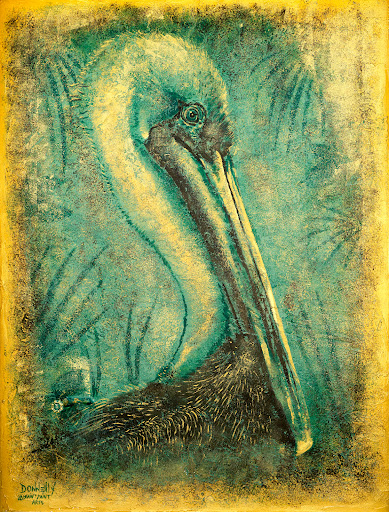
Besides NFTs, you could also reward buyers and sellers in other tokens and create a community around your platform.
3/ Efficiency
Property NFT sales enjoy the efficiency of blockchains.
You only spend a few minutes accepting a contract to buy a house, which makes the bidding process extremely efficient.
Plus, there’s a single smart contract used to sell houses everywhere. That’s much more standardized than using different processes for different districts or countries.
In Natalie’s own words, “ownership of properties is already digital…[it is] recorded on databases”.
So, why not record it on a more secure, public database – blockchain?

Propy’s now preparing for many more NFT house sales, starting with the Tampa property, PropyNFT-0003:

This one’s sold in USDC, a stablecoin, to protect buyers and sellers from volatility in the crypto market.
It’s also planning to open up crypto-backed mortgages, so buyers don’t need to have all the cash up-front.
Exciting things are in the pipeline, not just for Propy but for the entire industry. Property NFT is a nascent market and there are still many kinks to work through, but I’m optimistic about its future.
I wonder how far we are before I can indulge on a web3 Zillow and say, “I would totally buy the NFT of this house if I had the money”.

Special thanks to Natalia Karayaneva for speaking about Propy and the future of real estate.
🤫 P.S. You can also read this post on Mirror.